

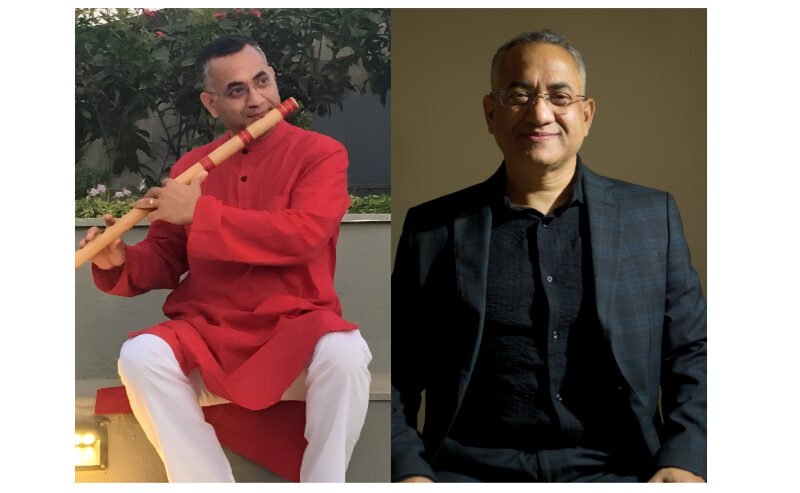
For a long time, Shailendra Aswal’s career looked exactly the way success is expected to look. Over more than twenty-five years, he built his professional life across technology, consulting, and innovation, taking on leadership roles at companies such as Yahoo, [24]7.ai, and Uber. It was a career marked by scale, responsibility, and the kind of momentum that signals progress from the outside.
But there was one pattern in his journey that often surprised people. At different points, he chose to step away from established corporate roles, spend time doing something completely different, and then return. To others, it seemed unusual. Why walk away from a successful career, especially when there was still more to build?
For years, Shailendra Aswal answered that question in the way most professionals do. He spoke about timing, opportunities, and the choices that made sense at that stage of life. But with distance, he has come to see those decisions in a more honest light.
What looked like career breaks from the outside were, in reality, periods of reckoning. They gave him distance from the noise of work and brought him closer to questions he had been postponing.
The Questions That Follow Success
Like many high-performing professionals, Shailendra had spent years operating inside demanding environments where the pace rarely slows down. Work moves quickly, goals change, expectations grow, and before long, momentum begins to shape life as much as intention does.
It was during one of those periods away from corporate life that he began thinking more seriously about what he needed from the next phase of his career, not in terms of designation or compensation, but in terms of how he wanted to live while doing the work.
He was preparing to return to the corporate world after a break, and he was not especially worried about finding another role. He knew he could re-enter that ecosystem. The real question was different: how would he stay grounded once he was back in the speed and intensity of it?
One afternoon, while sitting with a cup of coffee and thinking about what lay ahead, he found himself absent-mindedly writing on a sheet of paper. A single word appeared: anchor.
It was a small moment, but the word stayed with him.
He kept returning to it because it captured something he had not yet fully put into language. He was not looking for another milestone. He was looking for something that would help him stay connected to himself while moving through a world that constantly rewarded output, ambition, and motion.
Why Music Entered the Picture?
The answer did not come from a boardroom, a leadership framework, or a new professional plan. It came from somewhere unexpected, Shailendra found himself drawn to music.
There was no obvious reason for it. He did not come from a musical family, had no formal training, and had not grown up imagining that music would one day become an important part of his life. In retrospect, that distance from everything he already knew may have been part of the appeal. Music belonged to a world outside the one he had spent decades building.
Because his work involved extensive travel, he wanted an instrument he could carry with him. That is how he discovered the bansuri, the Indian bamboo flute.
The beginning was not romantic. Finding a teacher was difficult, so he started learning on his own, through books, recordings, and whatever online resources he could find. What began as curiosity slowly became habit, and then discipline.
It was one of the few things in his life that did not need to be useful in any conventional sense.
There was no professional upside to justify the time. No metric attached to the effort. No larger strategy behind it. The bansuri simply asked for patience, repetition, attention, and the willingness to begin badly at something. In a life shaped by competence and performance, that was new.
Over time, the practice began to do something work no longer could: it slowed him down enough to hear himself think.
Learning the Bansuri, and Finding Something More
More than a year later, Shailendra connected with Himanshu Nanda ji, senior disciple of the legendary Pandit Hariprasad Chaurasia. Soon after, he attended a workshop that changed the way he understood his relationship with music.
Until then, the bansuri had been a private practice, something he was learning mostly on his own. The workshop was different. It was the first time he found himself in a room full of people holding the same instrument, all at different stages of learning, all there for the same reason.
He remembers the music, of course, but what left the deeper mark was the atmosphere in the room, the seriousness, the warmth, the humility of the learning process, and the sense of shared devotion among people who had come together simply because they cared about the same thing.
For someone who had spent much of his life in professional environments where people are often introduced by their titles, achievements, or roles, this felt very different. Here, nobody needed to prove anything. People were simply students of the same art form, showing up with attention and respect.
That experience stayed with him because it offered something he had not known he was missing: a space in life that was not organised around achievement.
The years that followed opened up an entirely new world, mentors, friendships, creative collaborations, and eventually the opportunity to help establish Mystic Bamboo. But the deeper impact was more personal than professional. Music had begun as an attempt to find balance. Somewhere along the way, it also became a way of seeing himself differently.
When Professional Success Stops Answering the Bigger Questions
As the years went by, Shailendra began to notice that the questions he had wrestled with were not his alone. Across his career, he had met many accomplished professionals who had built impressive lives on paper. They had worked hard, achieved credibility, led teams, and reached positions that younger versions of themselves might once have aspired to. Yet many of them still found themselves confronting a quieter set of questions.
What now? What matters to me beyond the next professional milestone? How do I want the next phase of my life to feel?
These are not questions that come only from dissatisfaction. In many cases, they emerge after success, when the external markers are in place, but the internal sense of direction becomes less straightforward. You can be doing well and still feel uncertain about what you are building your life around.
That recognition eventually shaped the thinking behind My Life Kompass.
The Thinking Behind My Life Kompass
My Life Kompass grew out of the belief that modern professionals often need more than career advice. They need a way to step back, reflect, and make sense of change before it turns into drift.
Built around coaching, reflection, community, and practical tools, the platform is designed for people who are navigating transition, whether that means rethinking work, moving through uncertainty, or trying to build a life that feels more intentional than automatic.
The premise is not that ambition is misguided or that success is empty. Shailendra’s own life would not support either of those conclusions. The point is simpler, and perhaps more useful: professional success does not answer every question a person has about how they want to live. At some stage, many people need a different kind of conversation, one that goes beyond performance and asks what steadiness, meaning, and self-respect look like in everyday life.
That is the space My Life Kompass is trying to occupy.
What Shailendra Aswal’s Story Really Says About Growth and Change
If there is one thing Shailendra’s story makes clear, it is that life rarely changes in one dramatic moment. More often, change begins quietly. A period of restlessness. A sense that something is missing, even when everything looks fine from the outside. A curiosity that seems unrelated to work, but turns out to matter far more than expected.
In his case, that turning point did not begin with a major career decision. It began with the search for something that would help him stay steady inside a demanding life. The answer happened to come through music. For someone else, it may come through a completely different door.
What matters is not the form it takes, but the willingness to pay attention when a part of you is asking for a different kind of life.
For Shailendra, that process began with a single word written on a piece of paper.
